
Get custom website creation
from our experts.
Looking for the website design. Let our experts design your site, so you can focus on what matters most.
Our experts build unique, effective websites based on your specifications. Website design doesn’t have to be a time-consuming hassle, let our experts build the website you’ll be proud to share.
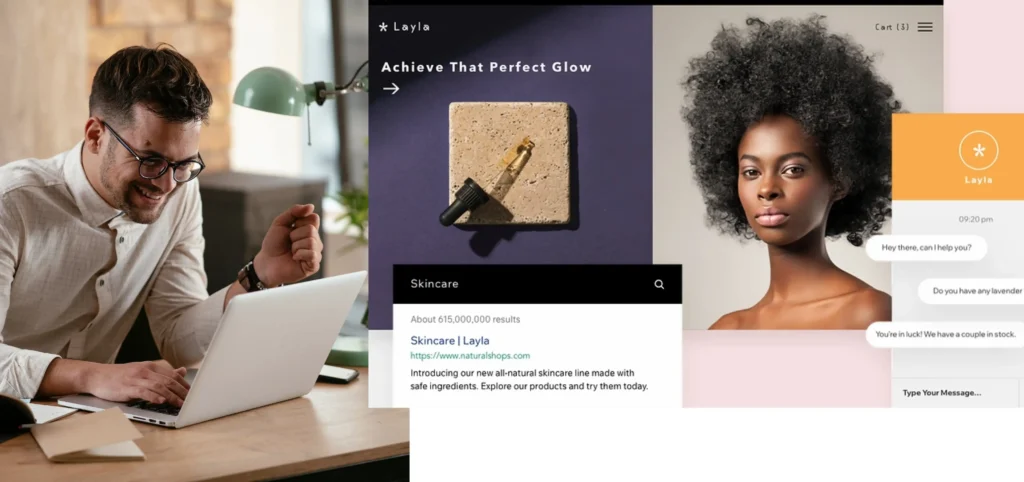
With Pro Support, our experts become part of your team. Continue getting help from the very people who designed your site by adding
Pro Support to your plan and letting us handle all future changes for you.

we’ll build a branded website with all the right tools. You’ll stand out from the competition with a custom website built from scratch
Sell products and offer bookings on website We support over 10k websites, and over 30% are online stores.
Your custom website creation will be achieved into three steps, which can be completed in just few week(s)
Understand the purpose of the website (e.g., informative, e-commerce, portfolio, blog, etc.).
Analyze competitor websites to identify best practices and areas for improvement
Define the navigation menu to ensure easy and intuitive user navigation
Decide on the platform you'll use to build the website (e.g., WordPress, Squarespace, Wix, custom coding).
Create wireframes or mockups to visualize the layout and structure of the website.
Ensure the website is responsive, meaning it adapts to different devices and screen sizes (mobile, tablet, desktop).
Use a mix of text, images, videos, and other media to enrich the user experience
Perform thorough testing to identify and fix bugs, compatibility issues, and user experience problems.
Upload the website files to the server and make it accessible to the public.
Website design is the process of planning, creating, and organizing the visual and functional elements of a website. It includes the layout, color schemes, typography, graphics, and user interface to create an aesthetically pleasing and user-friendly website.
Good website design is crucial because it impacts user experience, engagement, and conversion rates. A well-designed website is more likely to attract and retain visitors, convey professionalism, and effectively communicate information.
A well-designed website typically includes a clean and intuitive layout, easy navigation, visually appealing graphics, consistent branding, responsive design for various devices, fast loading times, and user-friendly content.
Responsive web design is an approach that ensures a website’s layout and content adjust automatically to fit different screen sizes and devices, such as desktop computers, tablets, and smartphones. This is essential for providing a consistent and user-friendly experience across all platforms.
User experience design focuses on creating a positive and seamless experience for website visitors. It involves considering user needs, preferences, and behaviors to optimize the website’s usability, accessibility, and overall satisfaction.
User interface design focuses on the visual and interactive aspects of a website, including buttons, menus, forms, and other elements that users interact with. It aims to create an intuitive and visually appealing interface.
To make your website visually appealing, consider factors such as color selection, typography, imagery, and layout. Ensure that your design aligns with your brand’s identity and conveys a consistent message.
Custom web design involves creating a unique and tailored design for your website from scratch, whereas website templates offer pre-designed layouts and elements that you can customize to some extent. Custom design provides more flexibility and uniqueness, while templates are often quicker and more cost-effective.
Content is a crucial component of website design. It includes text, images, videos, and other media that convey information to visitors. Well-organized and engaging content enhances user experience and communicates your message effectively.
SEO involves various practices to improve your website’s visibility in search engine results. This includes optimizing content for relevant keywords, creating high-quality backlinks, improving site speed, and ensuring mobile-friendliness.
The website design process often includes planning and research, wireframing and prototyping, design mockups, development, testing, and launch. Post-launch, ongoing maintenance and updates are essential.
To make your website accessible, follow web accessibility guidelines such as WCAG (Web Content Accessibility Guidelines). This includes providing alternative text for images, using semantic HTML, ensuring keyboard navigation, and offering resizable text.
When selecting a web designer or agency, consider their portfolio, experience, client reviews, and pricing. It’s essential to find a partner whose design style aligns with your vision and goals.